

Our goal is to become your true partner in the field of crane in China. Jiangsu Zhendong Port Machinery Manufacturing is a professional port machinery manufacturing enterprise integrating product research and development, design, manufacturing and installation of port cranes. Our company has a strong technical force and experienced installation, debugging and after-sales service team. We serve customers with regular cycles, preferential prices, and good reputation, and continue to innovate and go global.
Why Choose Us
Our Certification
Our products have passed the international ISO9001:2000 standard quality system certification and CCS China Classification Society quality system certification, and have passed the ISO9001 quality management system certification. The company has the right to import and export on its own.
Product Application
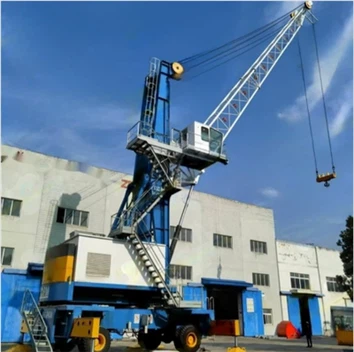
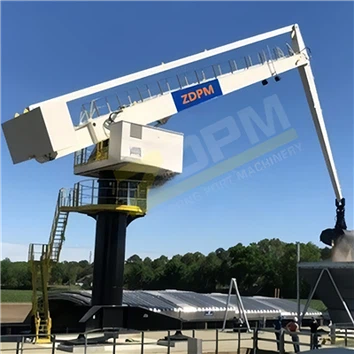
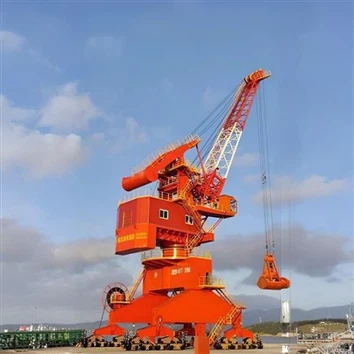
Our main products include fixed load luffing cranes, fixed rack luffing slewing cranes, slewing hydraulic cranes, floating cranes, hydraulic cranes, etc. These products are widely used in cargo loading and unloading, stacking, dredging and lightering of engineering ships, and dock lifting operations in ports, power, metallurgy, and mining enterprises.
Production Equipment
Our company has gantry cranes, magnetic drills, CNC flame cutting machines, inverter CO2 gas shielded welding machines, CG1-30 semi-automatic flame cutting machines, submerged arc welding machines MZ-1000, bending machines, plate rolling machines, shearing machines, milling machines, lathes, sawing machines and other equipment.
Product Market
Relying on strong scientific research strength, our company's leading products have covered cities such as Shanghai, Dalian, Shenzhen, and Qingdao. Our products have opened up the international market and are exported to Southeast Asia, Africa, and developed countries in Europe.





Advantages of Crane
Efficiency: Cranes can lift and move heavy loads quickly, significantly speeding up construction and manufacturing processes.
Versatility: Different types of cranes (e.g., tower cranes, mobile cranes, overhead cranes) can be used for various applications, making them suitable for diverse tasks.
Precision: Cranes allow for precise placement of materials, which is crucial in construction and assembly environments.
Safety: When operated correctly, cranes can reduce the risk of injury compared to manual lifting, as they minimize the physical strain on workers.
Increased Reach: Cranes can extend their reach to access hard-to-reach areas, allowing for efficient lifting and placement of materials.
Heavy Load Capacity: Cranes are designed to handle heavy loads that would be impossible to lift manually or with smaller equipment.
Application of Crane
Moving materials
Cranes are commonly used to move heavy materials such as steel beams, concrete blocks, and lumber from one location to another. This is especially useful in high-rise construction projects, where materials need to be lifted to higher levels.
Setting up structures
Cranes are used to lift and position large pre-fabricated sections of buildings, such as walls, roofs, and floors, into place. This can save a significant amount of time and labour compared to traditional building methods.
Demolition
Cranes are also used in the demolition of buildings and structures. They can be used to lift and remove large sections of the structure, making the demolition process more efficient.
Maintenance
Cranes are used for maintenance work on buildings and structures, such as cleaning windows or repairing roofs. They can provide access to hard-to-reach areas and lift equipment and workers to the required height.
Specifications for Crane
|
Parameter |
Unit |
GQ5-15 |
GQ8-18 |
GQ10-15 |
GQ16-18 |
GQ25-22 |
GQ30-18D |
GQ45-18D |
|
Rated lifting capacity |
T |
5 |
8 |
10 |
16 |
25 |
30 |
45 |
|
Working range (A-B) |
M |
6~15 |
7~18 |
6~15 |
7~18 |
8~22 |
7~18 |
8~18 |
|
Lifting height (on base) C |
M |
8 |
8 |
10 |
8 |
8/13 |
8 |
10 |
|
Lifting height (below base surface) D |
M |
6 |
7 |
6 |
7 |
7 |
6 |
8 |
|
Lifting speed (hook) |
M/min |
25 |
24 |
22 |
24 |
0~35 |
13 |
0~15 |
|
Lifting speed (grab bucket) |
M/min |
50 |
48 |
45 |
48 |
0~48 |
|
|
|
Luffing speed |
R/min |
24 |
25 |
22 |
20 |
0~16/25 |
14 |
12 |
|
Rotation speed |
M/min |
1.6 |
1.6 |
1.8 |
1.6 |
0~1.5 |
1.3 |
1 |
|
Installed capacity |
KW |
89 |
111 |
120 |
194 |
261 |
135 |
157 |
Typse of Crane
Tower crane
Tower cranes are tall, vertical cranes that are used for constructing tall buildings. They are typically fixed to the ground and have a long horizontal jib that can be raised and lowered as needed.
Mobile crane
Mobile cranes are versatile cranes that can be moved from one location to another on a trailer or truck. They are commonly used in construction sites to lift and move heavy materials.


Crawler crane
Crawler cranes are similar to mobile cranes, but they are mounted on tracks instead of wheels. This makes them more stable and able to traverse rough terrain.
Rough terrain crane
Rough terrain cranes are mobile cranes designed for use on rough, uneven terrain. They typically have four large rubber tires and a telescopic boom that can be extended to reach high places.
Precautions for Use Crane
Do not leave the load suspended in air for more time than needed. In the same line, neither should the load be left suspended for a long period of time. Once you start moving it, it is better to finish it to avoid any kind of accident. The person responsible has to be constantly aware of it: Many crane accidents occur due to improper handling or delays during the lift.
Proceed with the lifting operation slowly and properly. Avoiding rush and staying calm throughout the process will make the end as comfortable and safe as possible. Do not accelerate or brake abruptly to prevent the load from swaying. Proper communication and hand signals are also critical for the job.
Safety Checks to Perform Before Putting Your Crane into Operation
Test run the crane the full length of the runway and bridge span to ensure no obstructions will interfere with the crane travel motions. Test that all motion’s travel speed match the designed specifications. Turn the crane off, engage the hoist “up” switch, the hook should not rise. Engage all other motions to ensure no movement is possible. Turn the mainline switch back on and raise the hook to test the upper limit switch. All travel and hoist motions should match the control labeling directions.
Check that the wire rope is properly seated. Ensure that it is not twisted, kinked or damaged. Check all other limit devices for proper functionality. Train all crane operators on the functionality of all new cranes. Provide proper inspections and maintenance as required by local regulations and recommended by the Original Equipment Manufacturer (OEM). These are just a few of the safety checks that should be performed before operating a crane.
Custom Crane Process
Initial Consultation
We discuss your specific requirements, operational needs, and environmental conditions.
Design & Engineering
Our engineers design a custom crane solution that meets your exact specifications.
Manufacturing
We manufacture your crane using high-quality materials and precise engineering techniques.
Installation & Testing
Our team installs the crane at your site and conducts thorough testing to ensure optimal performance.
Ongoing Support
We provide ongoing maintenance and support to ensure your crane continues to operate efficiently.
Packaging and Shipping of Crane
|
Packing |
Ordinary wooden boxes or frame wooden boxes |
|
Shipping |
Flatbed trucks, lowboy trailers, specialized heavy haul trucks |
We're well-known as one of the leading crane manufacturers and suppliers in China. Please feel free to buy high quality crane for sale here from our factory. Contact us for more details.
rubber tyred crane, Ordinary Ship Unloader, gantry crane