


Product Description
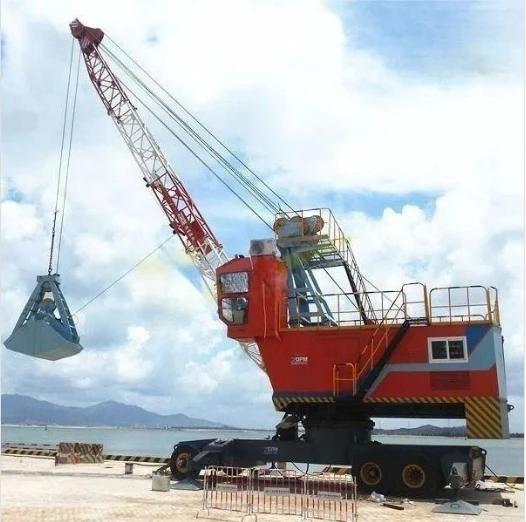
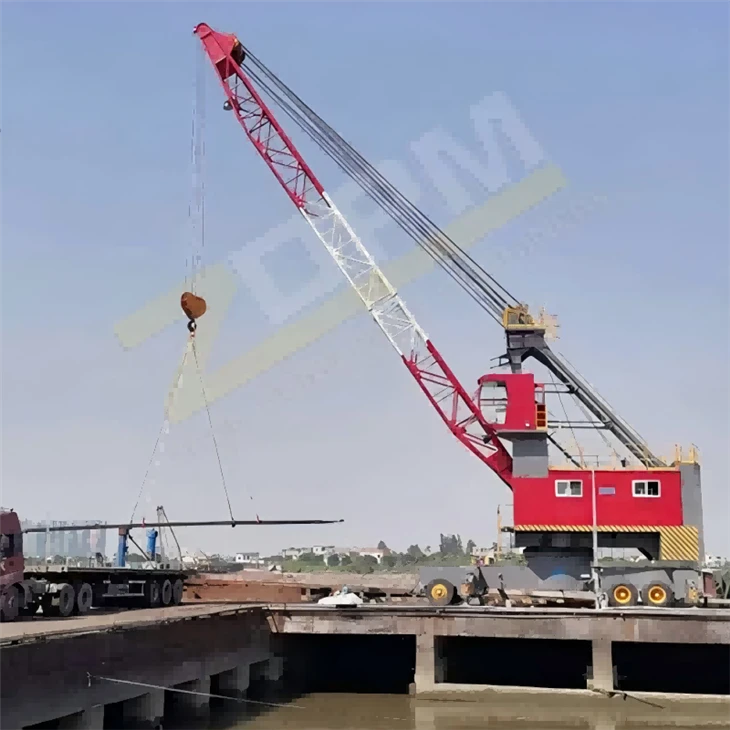
Electric tire cranes represent an innovative advancement in material handling equipment, combining the powerful lifting capacity, enhanced mobility, and environmental benefits of traditional crawler cranes. The key design innovation lies in integrating the cab and crane control room into a single operating station. This design originates from crawler crane technology but has been improved to offer better ergonomic performance. Electric tire-mounted cranes integrate electric drive systems with tire-driven travel mechanisms, delivering a combination of environmental friendliness, flexibility, and efficiency.
1. Basic Structure
Electric drive system: An electric motor (powered by a battery or external power supply) serves as the power source, achieving zero emissions and low noise, making it suitable for environments with high environmental requirements.
Tire chassis: Equipped with rubber tires and no tracks, it enables flexible movement, making it ideal for frequent field operations.
Lifting mechanism: Includes the hoisting mechanism, luffing mechanism, and slewing mechanism. Frequency conversion control is typically adopted to ensure smooth and precise operation.
Leg system: The legs are extended to enhance stability during operation and retracted during travel, similar to a truck crane.
2. Core Features
- Environmental protection and energy efficiency: The electric drive produces no exhaust emissions, and energy consumption costs are lower than those of fuel-powered models, aligning with the trend of green construction.
- High mobility: The tire design allows for quick movement across construction sites, warehouses, ports, and other areas, and even short-distance road driving (subject to regulations).
- Intelligent control: Most models are equipped with PLC control systems, load monitoring, remote diagnostics, and other features to improve safety and operational convenience.
- Low maintenance costs: The electric system has a simple structure and requires less maintenance than an internal combustion engine.
3. Typical Application Scenarios
Urban construction: Indoor decoration, steel structure hoisting, and other scenarios sensitive to noise and emissions.
Port logistics: Container handling and cargo stacking, especially suitable for ports with strict environmental requirements.
Factory workshops: Equipment installation and material transfer, leveraging its flexibility and precise positioning.
New energy: Applications such as wind farm maintenance, combined with battery technology to enable operations in remote areas.
4.Compare with traditional cranes
|
Type |
Electric tire type |
Fuel tire type |
Crawler crane |
|
Mobility |
Flexible tires are suitable for hard roads |
Similar, but dependent on fuel |
Good at cross-country, but transfer requires flatbed truck |
|
Environmental protection |
Zero emission, low noise |
There are emissions and noise |
High emissions, loud noise |
|
Working performance |
Start and stop quickly, suitable for frequent operation |
Powerful, suitable for heavy load |
High stability, suitable for overweight lifting |
|
Prime cost |
Low electricity bill, less maintenance |
Fuel costs are high |
High transfer and installation costs |
5. Representative Model Examples
- Small tonnage (≤ 50 tons): Such as the Sany STC250E electric crane, suitable for urban working conditions.
- Large tonnage: The Liebherr LRT 1090-2.1 (hybrid), balancing power and environmental protection.
- Special design: Some models are equipped with fast-charging batteries or ultracapacitors to support rapid replenishment.
Hot Tags: Electric Tyre Crane, China Electric Tyre Crane manufacturers, suppliers, factory, Hydraulic Balanced Four Rod Gantry Crane, Multi section Boom Fixed Ship Loader, Tire Funnel, Double Girder Bridge Crane, Double Cable Double Flap Mechanical Grab, 30t 30m Electric Grab Crane