


Product Description
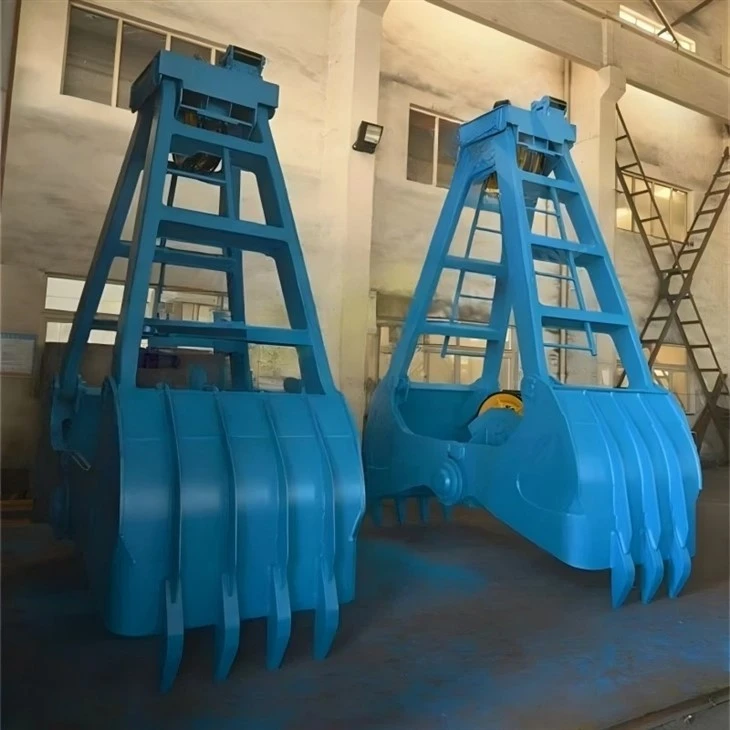
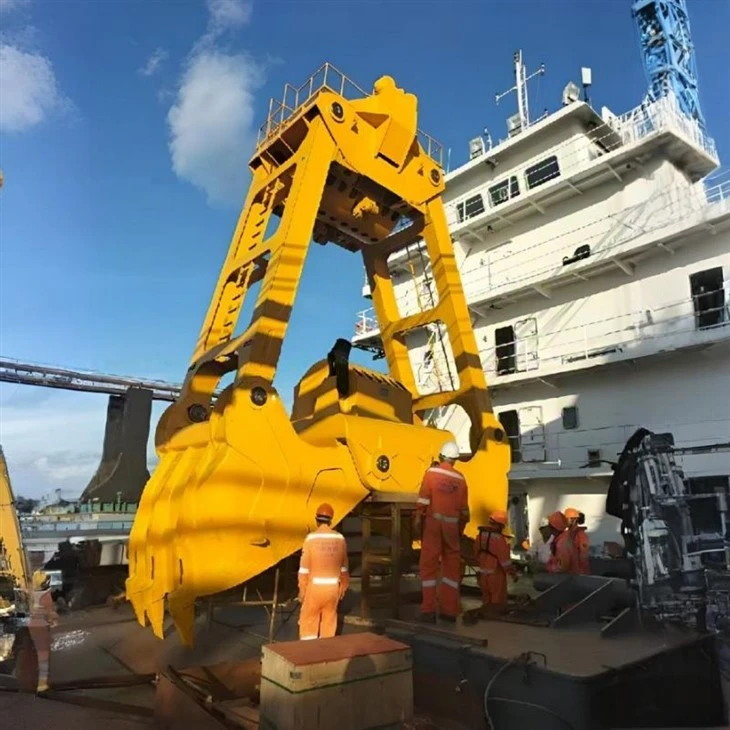
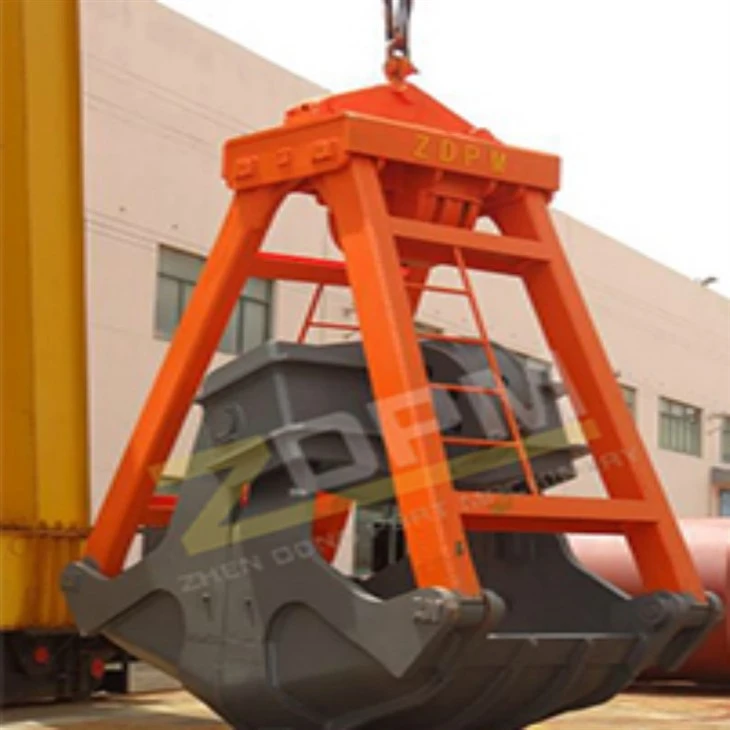
The dredging grab is an effective tool for underwater operations, including sludge removal, hard mud clearance, iron plate sand disposal, reef blasting, and even salvaging sunken vessels during waterway dredging. This type of grab boasts high production efficiency, durability, easy maintenance, and user-friendly operation, demonstrating excellent performance under harsh working conditions. The internal pulleys feature multiple sealing layers to ensure water and sediment do not seep into the grab, even at seawater depths of several dozen meters. Through years of research, our company has developed a diverse product series with lifting capacities ranging from 6 tons to 200 tons. This type of grab is compatible with single-rope, double-rope, or four-rope cranes.
1. Basic Structure of the Dredging Grab
The dredging grab is usually composed of the following parts:
- Funnel body: The main structure, including two or more openable and closable funnels, mostly made of high-strength steel (such as wear-resistant steel plate) and optionally lined with wear-resistant material.
- Teeth: A toothed structure installed on the edge of the bucket to enhance digging capacity; these can be replaced as needed.
- Hydraulic system (hydraulic grab): Drives the opening and closing of the bucket, providing strong closing force.
- Steel wire rope/chain (mechanical grab): Controlled by lifting equipment (e.g., dredger, crane) for lifting and opening.
- Rotating mechanism (some models): Allows the grab to rotate 360°, improving operational flexibility.
2. Classification of Dredging Grabs
By driving mode:
Hydraulic grab: Offers strong closing force and high precision, suitable for hard materials.
Mechanical grab: Controlled by steel wire rope; features a simple structure and low cost.
By use:
General type: Suitable for silt and soft soil.
Rock grab: Reinforced structure with heavy-duty teeth for gravel or broken rock.
Environmental grab: Sealed design, leak-proof, used for cleaning polluted sediment.
By opening and closing:
Double-petal grab: The most common, symmetrical petal design.
Multi-petal grab (e.g., lotus grab): Suitable for loose materials to prevent spillage.
3. Working Principle of the Dredging Grab
- Lowering: The grab is lowered to the bottom of the water by a crane or dredger boom.
- Cutting: The teeth cut into the material under self-weight or hydraulic pressure.
- Closing: The hydraulic cylinder or wire rope pulls the bucket closed to collect the material.
- Lifting: After closure, the grab is lifted to the water surface and transported to the unloading point (e.g., barge, shore).
- Unloading: The bucket opens to discharge the material.
4. Features and Advantages of the Dredging Grab
Efficient cleaning
Suitable for narrow or deep water areas, compensating for the limitations of sludge suction vessels.
Precise control
Enables selective pickup of materials in specific areas.
Strong adaptability
Can handle materials of varying hardness by changing bucket teeth or adjusting hydraulic pressure.
Environmental protection
Minimizes water disturbance during excavation, reducing secondary pollution.
5. Application Scenarios of the Dredging Grab
Waterway maintenance: Removal of silt and sand from ports and canals.
Water conservancy projects: Dredging and reinforcement of reservoirs and embankments.
Undersea engineering: Pipeline trench excavation or backfill.
Pollution control: Cleaning up contaminated sediment (e.g., heavy metals, organic matter).
Main technical parameters
|
Type |
Room for all (m3) |
Conduct oneself with dignity (t) |
Outline dimension (mm) |
Straight slide wheel diameter (mm) |
Pulley |
Lifting capacity of crane (t) |
||||
|
A |
B |
C |
D |
E |
||||||
|
BS6SJ[1]4A |
1(00) |
4 |
2380 |
3458 |
3533 |
4083 |
1320 |
Ø560 |
5 |
6 |
|
BS12SJ[1.5]6.5A |
1.5(00) |
6.5 |
3020 |
4039 |
3772 |
4532 |
1500 |
◎560 |
5 |
12 |
|
BS20SJ[5]8A |
5(300) |
8 |
3260 |
5042 |
4502 |
5280 |
1820 |
O650 |
4 |
20 |
|
BS30SJ[5]13B |
5(150) |
13 |
3740 |
5450 |
4942 |
5916 |
2012 |
0800 |
5 |
30 |
|
BS55[5.5]35BSJ |
5.5(00) |
35 |
3960 |
5812 |
5614 |
6565 |
2150 |
◎880 |
6 |
55 |
|
CS45SJ[4]25AV |
4(250) |
25 |
3840 |
5657 |
5748 |
6715 |
1950 |
◎880 |
6 |
45 |
|
CS46SJ[5]36BV |
5(250) |
36 |
3600 |
5947 |
6164 |
7125 |
1940 |
◎880 |
6 |
45 |
|
CS45SJ[8]28AV |
8(250) |
28 |
4040 |
6632 |
6494 |
7364 |
2102 |
0880 |
6 |
45 |
|
CS55SJ[5]32B |
5(250) |
32 |
3960 |
5734 |
7194 |
8167 |
1940 |
◎880 |
5 |
55 |
|
CS7OSJ[16]48AV |
16(250) |
48 |
5130 |
7712 |
7415 |
8724 |
2954 |
1045 |
6 |
70 |
|
CS80[8]60AV |
8(250) |
60 |
4130 |
6695 |
7189 |
7753 |
2530 |
1045 |
7 |
80 |
|
CS80SJ[11]55BV |
11(250) |
55 |
5120 |
7780 |
7553 |
8924 |
2420 |
1045 |
7 |
55 |
|
CS200SJ[9]110BV |
9(250) |
110 |
5465 |
7202 |
8666 |
10264 |
3000 |
1500 |
7 |
110 |
Note: It can be customized according to customer needs
Hot Tags: dredging grab, China dredging grab manufacturers, suppliers, factory, grab, Fixed Crane, Single Boom Gantry Crane, Bag Filling Machine, Rotary Mobile Floating Ship Loader, Rubber Tyred Container Crane